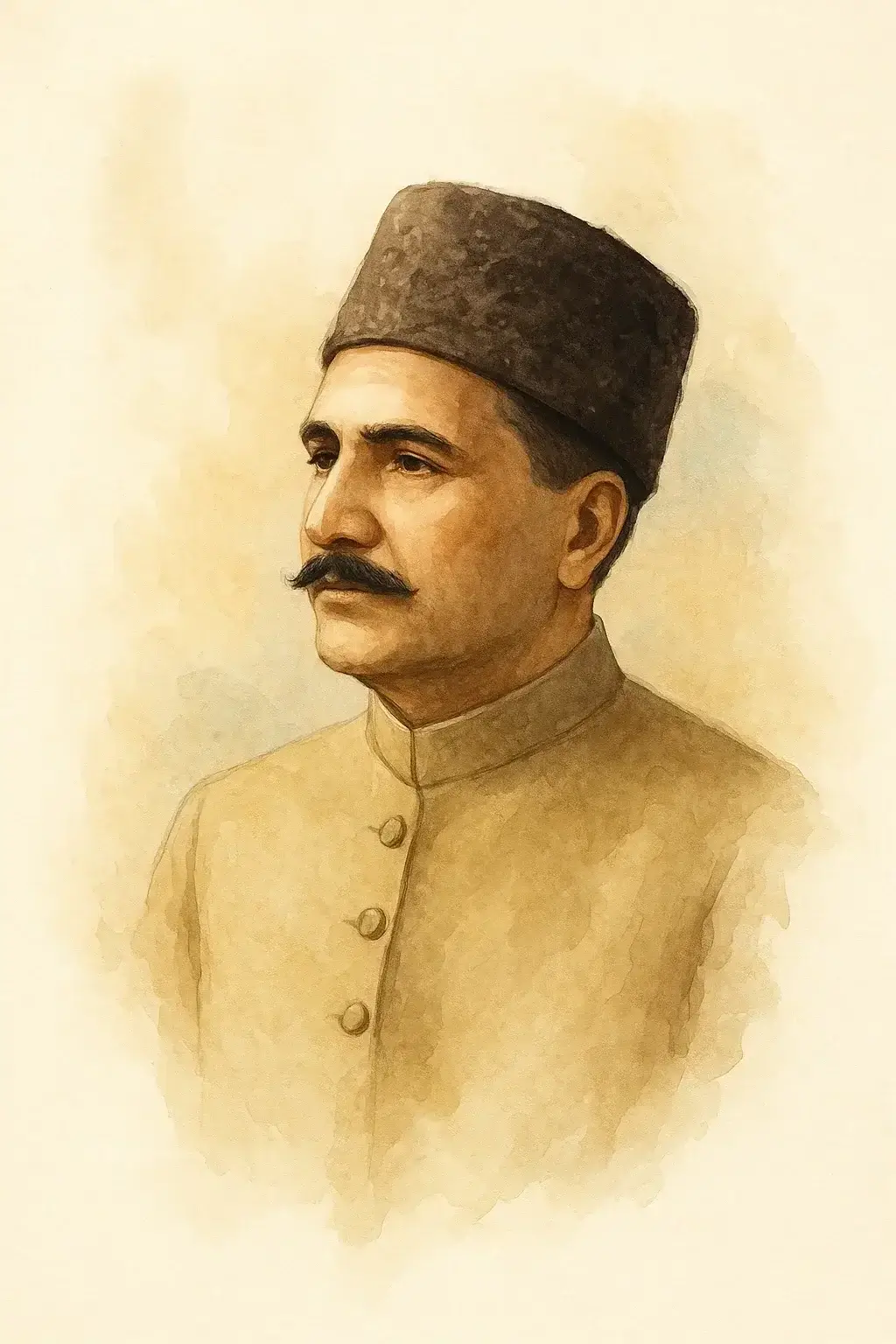
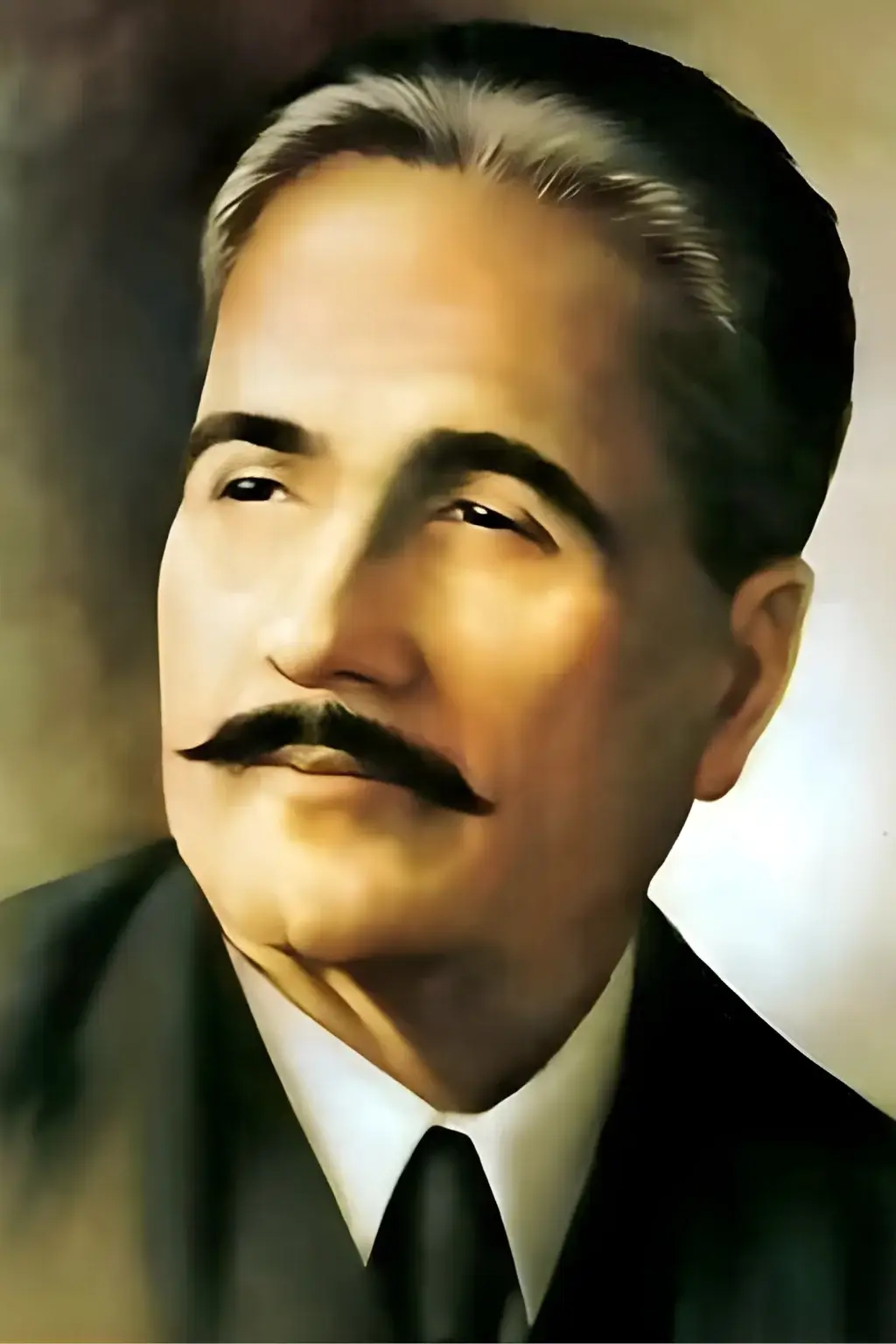
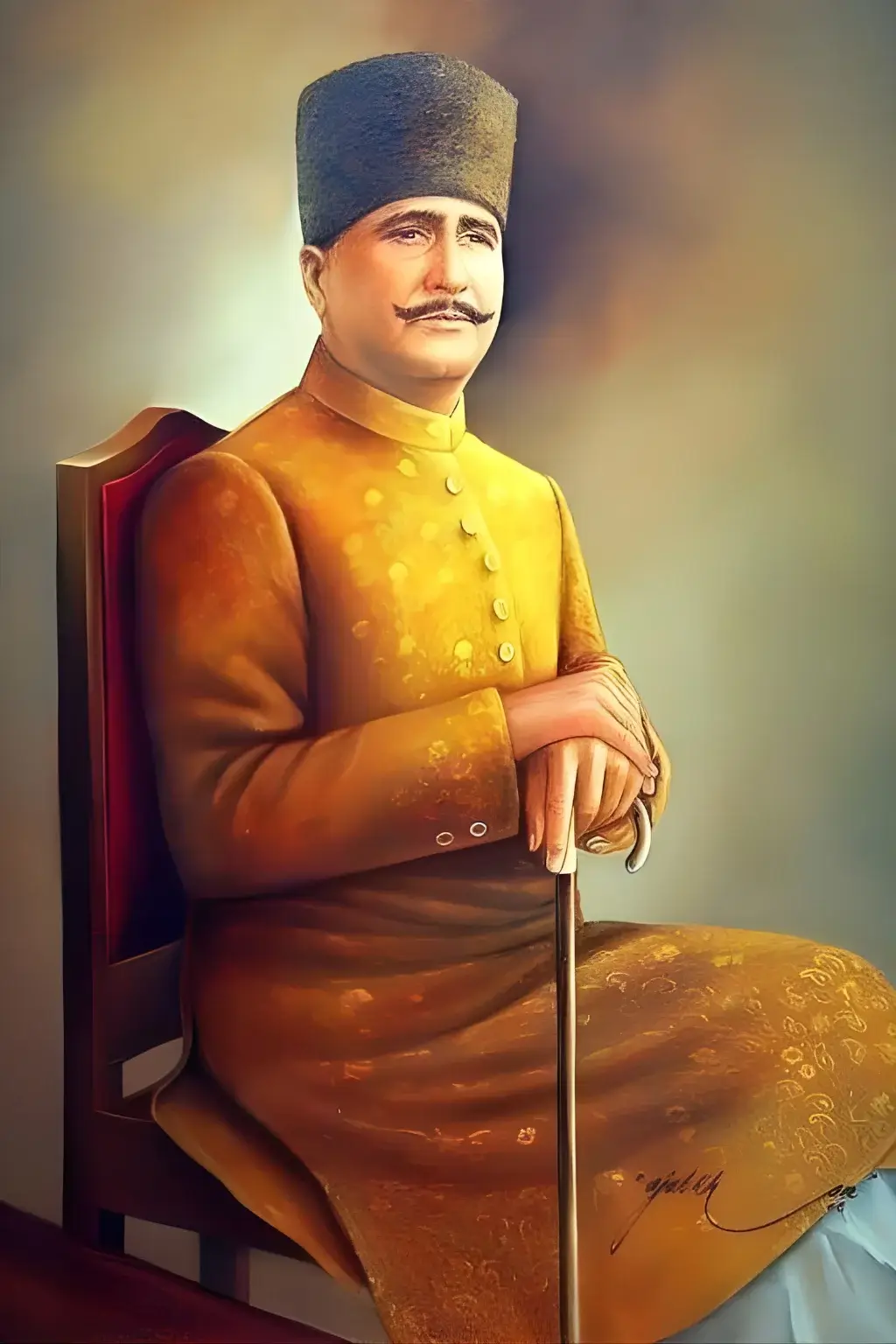
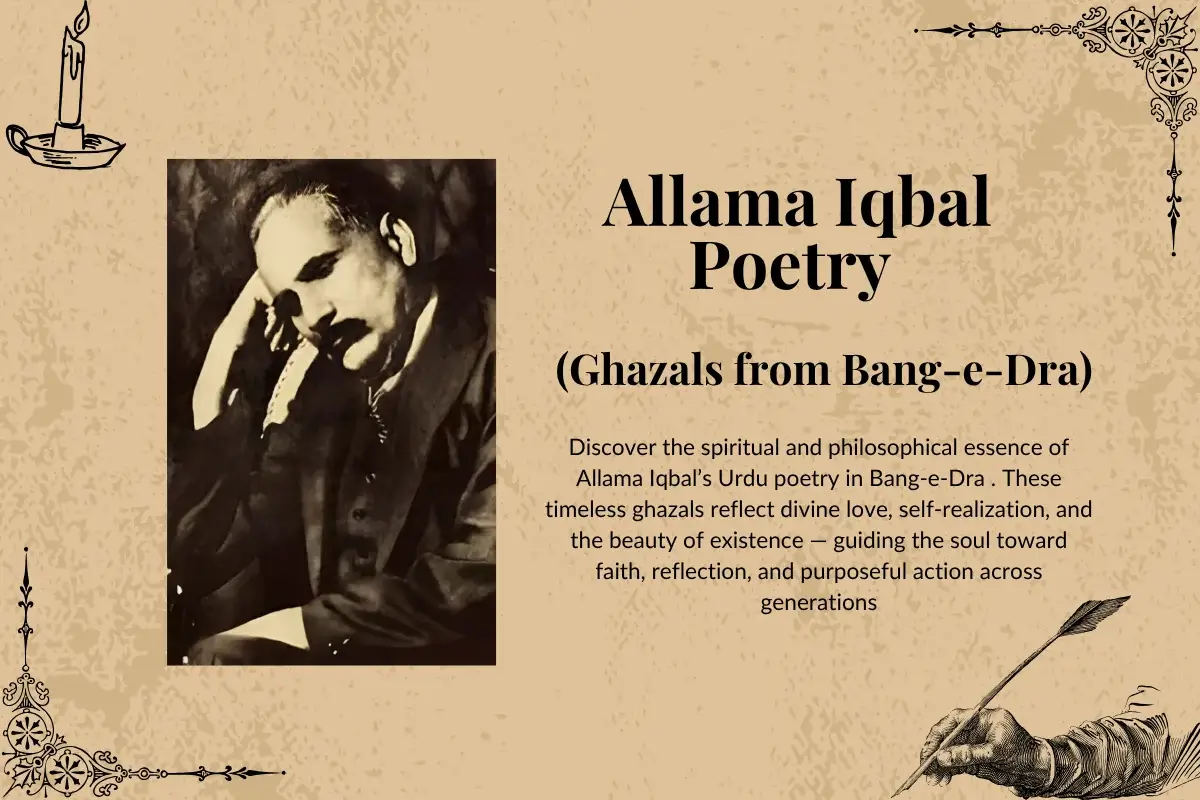
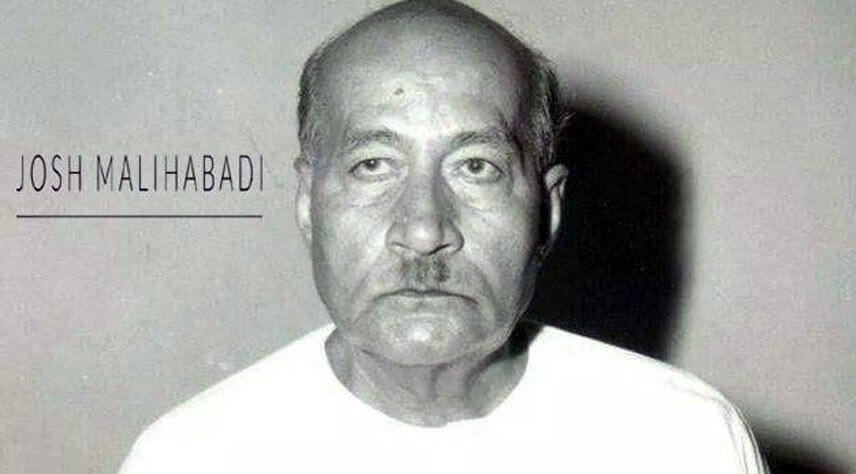
Poetry Allama Iqbal Urdu represents the timeless beauty of philosophical and spiritual expression in the Urdu language. Ghazals from Bang-e-Dra (بانگِ درا) capture Allama Iqbal’s early poetic vision where deep reflection, divine love, and self-realization meet artistic mastery. In these verses, Iqbal awakens the soul toward purpose, faith, and action, inspiring generations across the Muslim world. Each ghazal reflects a unique blend of classical rhythm and modern thought, making Iqbal’s Urdu poetry an everlasting treasure of literary wisdom.
The Garden of Being and Existence(گلزارِ ہست و بود)
Poetry Allama Iqbal Urdu represents a timeless reflection on existence, spirituality, and self-realization. In “The Garden of Being and Existence (گلزارِ ہست و بود)”, Allama Iqbal invites the reader to witness the delicate beauty of life. He captures its fleeting moments through the eyes of a seeker who yearns for divine truth.
Moreover, his verses blend philosophy, mysticism, and emotion. Each line forms a symphony of thought that awakens the soul to a higher purpose.
This ghazal is not merely poetry; rather, it is a meditation on being. It takes the reader on a journey into Iqbal’s cosmic vision where every leaf, flame, and breath whispers the secret of creation. Therefore, the poem gently reminds us of the eternal bond between the soul and the Creator.
In the broader realm of Poetry Allama Iqbal Urdu, “Gulzar-e-Hast-o-Bood” shines as a radiant symbol of his depth and mastery. Furthermore, his words encourage humanity to awaken its hidden potential. They inspire us to think, to feel, and to act with purpose. Indeed, this composition, filled with spiritual grace, continues to inspire readers across generations. It reminds us that within the garden of existence, the search for truth is the purest form of worship.
For those who wish to explore Iqbal’s life and works in greater detail, resources like the Iqbal Academy Pakistan provide valuable insight into his enduring legacy.
Ghazals — The Garden of Being and Existence
Do not look at the garden of existence like a stranger;
It is a sight worth seeing behold it again and again.
Since you have come into this world, see yourself as a spark of fire
Behold the fleeting nature of this fragile existence.
I admit, I am not worthy of beholding you
But look at my longing, look at my patient waiting.
If the desire to behold (the Beloved) has opened your eyes,
Then see in every path lies the imprint of the Beloved’s feet.
غزل — گلزارِ ہست و بود
گلزارِ ہست و بود نہ بیگانہ وار دیکھ
ہے دیکھنے کی چیز، اسے بار بار دیکھ
آیا ہے تو جہاں میں مثالِ شرار دیکھ
دم دے نہ جائے ہستیِ ناپایدار دیکھ
مانا کہ تیری دید کے قابل نہیں ہوں میں
تو میرا شوق دیکھ، میرا انتظار دیکھ
کھولی ہیں ذوقِ دید نے آنکھیں تری اگر
ہر رہ گزر میں نقشِ کفِ پائے یار دیک
Had I not come — what cause was there for complaint?( نہ آتے ہمیں اس میں تکرار)
In “Had I not come what cause was there for complaint?” (غزل ۔ نہ آتے ہمیں اس میں تکرار), Allama Iqbal explores the deep emotions of love, destiny, and divine longing. Moreover, this ghazal reveals the gentle balance between the human heart and the eternal spirit. It reflects the poet’s search for meaning within the mysteries of existence.
The poem speaks of spiritual awakening, self-discovery, and Sufi mysticism. Therefore, it encourages the reader to rise above sorrow and see the beauty hidden within divine purpose. Through such verses, Poetry Allama Iqbal Urdu continues to inspire generation after generation, guiding seekers toward faith and higher awareness.
As part of Iqbal’s celebrated collection Bang-e-Dra, this ghazal exemplifies his mastery of classical Urdu expression and his philosophical insight into human existence. Furthermore, it stands as a timeless reminder that every moment of pain or love is a step closer to understanding the infinite. For deeper insight into Iqbal’s vision and philosophy, readers can explore the Iqbal Academy Pakistan, a valuable source of his works and legacy.
Had I not come — what cause was there for complaint?
Had you chosen not to come, I would have had no complaint
But what was the shame in at least making the promise?
Your messenger revealed all the secrets
Tell me, my lord, what fault was mine in that?
In a crowded gathering, I caught sight of my lover
Your eyes, though drunk with ecstasy, were more alert than ever.
The envoy delayed, reluctant to appear
The envoy delayed, reluctant to appear
Drawn was Moses to Sinai, as if by unseen fire
O longing for the Divine Vision, what wondrous magnet was your desire!
Iqbal, your name still echoes far and near
What enchantment dwelt in your speech, so clear!
غزل ۔ نہ آتے ہمیں اس میں تکرار
نہ آتے ہمیں اس میں تکرار کیا تھی
مگر وعدہ کرتے ہوئے عار کیا تھی
تمہارے پیامی نے سب راز کھولا
خطا اس میں بندے کی سرکار کیا تھی
بھری بزم میں اپنے عاشق کو تاڑا
تری آنکھ مستی میں ہشیار کیا تھی
تامل تو تھا ان کو آنے میں قاصد
مگر یہ بتا طرزِ انکار کیا تھی
کھنچے خود بخود جانبِ طور موسیٰ
کشش تیری اے شوقِ دیدار کیا تھی
کہیں ذکر رہتا ہے اقبال تیرا
فسوں تھا کوئی، تیری گفتار کیا تھی
Strange indeed is the preacher’s piety( عجب واعظ کی دیں داری)
In “Strange indeed is the preacher’s piety” (غزل: عجب واعظ کی دیں داری), Allama Iqbal exposes the dissonance between outward religiosity and the inner spirit of faith. With sharp irony and profound insight, he questions the sincerity of those who preach virtue yet remain estranged from the essence of true belief. This ghazal embodies Iqbal’s fearless voice against hypocrisy and moral complacency a voice that calls for spiritual integrity over ritualistic display.
Here, Iqbal’s words transcend mere criticism; they become a mirror reflecting society’s flaws and the emptiness of superficial piety. In his distinctive philosophical tone, the poet reminds believers that the true strength of faith lies not in appearances but in action, sincerity, and self-awareness.
Within the world of Poetry Allama Iqbal Urdu, this ghazal stands as a timeless social and spiritual commentary. Therefore, it reveals the poet’s deep understanding of religion as a living, dynamic force that transforms the heart, not a set of lifeless customs. For readers who wish to explore Iqbal’s deeper religious philosophy and poetic works, the Iqbal Rahber offers valuable insight and authentic resources. Indeed, through such verses, Iqbal continues to inspire generations to rediscover the real essence of deen purity, courage, and truth.
Strange indeed is the preacher’s piety
O Lord, what a wondrous preacher’s faith is this!
He deems the entire world his foe, and calls it righteousness.
None has fathomed yet this mystery profound
Whence comes mankind, and whither is it bound?
From there the night drew darkness for its guise,
And thence the stars received their light that shines.
The envoy delayed, reluctant to appear
The envoy delayed, reluctant to appear
Our story of pain we softly impart,
Only to the keeper of our heart.
So fine, so cunning the preacher’s disguise
Yet the adhan makes his spirit rise in trembling sighs.
غزل ۔ عجب واعظ کی دیں داری
عجب واعظ کی دیں داری ہے یارب
عداوت ہے اسے سارے جہاں سے
کوئی اب تک نہ یہ سمجھا کہ انساں
کہاں جاتا ہے، آتا ہے کہاں سے
وہیں سے رات کو ظلمت ملی ہے
چمک تارے نے پائی ہے جہاں سے
تامل تو تھا ان کو آنے میں قاصد
مگر یہ بتا طرزِ انکار کیا تھی
ہم اپنی درد مندی کا فسانہ
سنا کرتے ہیں اپنے رازداں سے
بڑی باریک ہیں واعظ کی چالیں
لرز جاتا ہے آوازِ اذاں سے
From where shall I bring the straws?( لاؤں وہ تنکے کہاں سے)
In “From where shall I bring the straws? (غزل ۔ لاؤں وہ تنکے کہاں سے)”, Allama Iqbal gives voice to the soul’s longing in a world where hope struggles against despair. Moreover, the poet uses the metaphor of an unbuilt nest to express the pain of aspiration and the challenges of creation amid chaos. Through gentle yet powerful imagery, Iqbal reflects on the struggle of the seeker one who wishes to build, to rise, yet is surrounded by forces eager to destroy.
The ghazal resonates deeply with Iqbal’s vision of perseverance and faith. Therefore, it reminds the reader that even in times of adversity, the dream of rebuilding must not fade. This profound interplay between destruction and renewal mirrors the eternal rhythm of existence a theme that echoes throughout Poetry Allama Iqbal Urdu and embodies his spiritual and philosophical message.
Part of the celebrated Bang-e-Dra, this ghazal stands as a testament to Iqbal’s mastery of symbolism and emotional depth. Furthermore, it serves as a timeless reminder that creation demands courage, and even a fragile straw can carry the weight of hope when lifted by conviction and divine purpose. For more on Iqbal’s philosophy of hope and human potential, visit the Allam Iqbal a valuable source of his poetic and philosophical works.
From where shall I bring the straws?
Whence shall I gather straws to weave my home,
When restless lightnings yearn to see it gone?
Ah, cruel fate! The heavens took precise aim to destroy
The branch I’d sought to build my nest and joy.
Thy gaze unites the seventy-two divided creeds,
One goblet of Thine fulfills the world’s deep needs.
May I kindle in my soul a yearning so divine,
That the very skies descend to blot out this life of mine.
Patiently reap your field, each kernel in its turn
And soon a lightning shall descend, for all to burn.
My comrade in song, but for the hunter’s flawed design,
I too had swooped, ensnared, for just one grain of thine.
Sing not, O heart’s bird, of freedom in this vale
Ah, this garden was not born for such a tale.
غزل ۔ لاؤں وہ تنکے کہاں سے
لاؤں وہ تنکے کہاں سے آشیانے کے لیے
بجلیاں بیتاب ہوں جن کو جلانے کے لیے
وائے ناکامی فلک نے تاک کر توڑا اسے
میں نے جس ڈالی کو تاڑا آشیانے کے لیے
آنکھ مل جاتی ہے ہفتاد دو ملت سے تری
ایک پیمانہ ترا سارے زمانے کے لیے
دل میں کوئی اس طرح کی آرزو پیدا کروں
لوٹ جائے آسماں میرے مٹانے کے لیے
جمع کر خرمن تو پہلے دانہ دانہ چن کے تو
آ ہی نکلے گی کوئی بجلی جلانے کے لیے
پاس تھا ناکامیِ صیاد کا اے ہم صفیر
ورنہ میں اور اُڑ کے آتا ایک دانے کے لیے
اس چمن میں مرغِ دل گائے نہ آزادی کا گیت
آہ یہ گلشن نہیں ایسے ترانے کے لیے