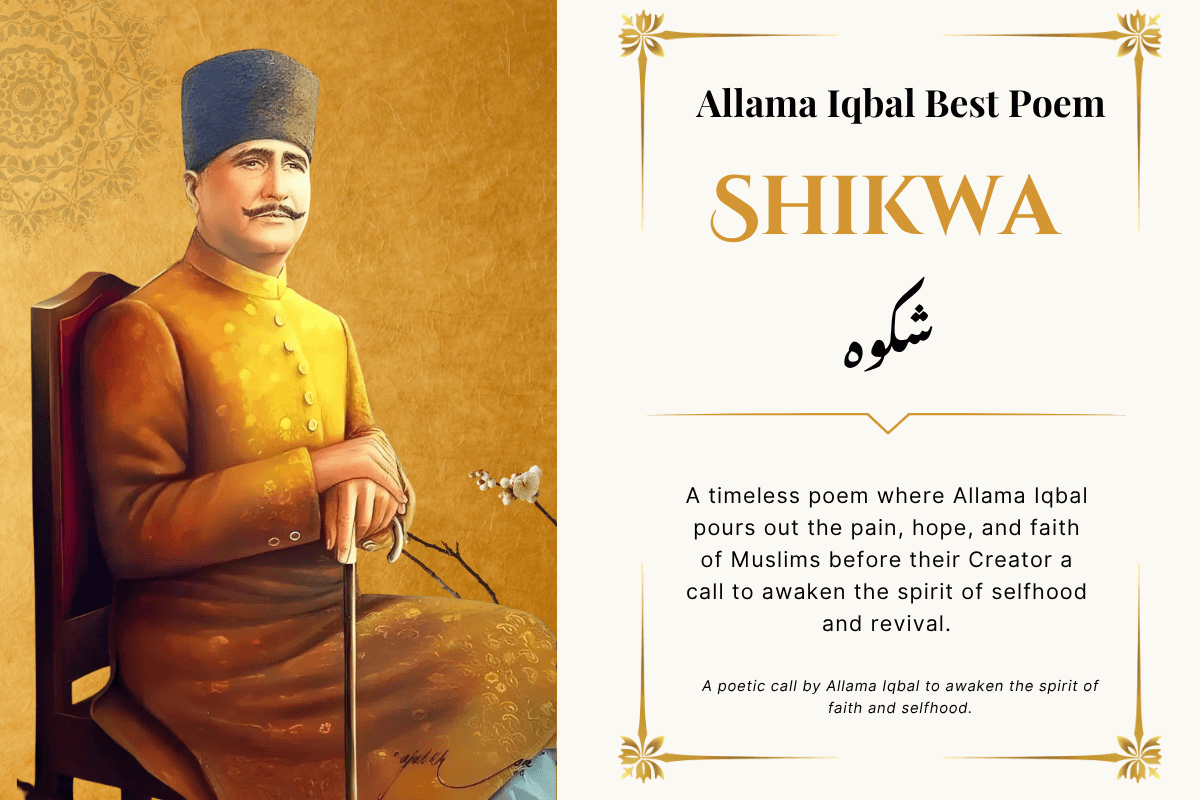
Dr. Allama Muhammad Iqbal, the great philosopher, poet, and visionary of the subcontinent, holds a unique place in the history of Muslim thought and literature. Born in 1877 in Sialkot, he was not only a gifted poet but also a profound thinker who combined deep spirituality with a strong sense of social and political awareness. Moreover, through his inspiring works such as the Allama Iqbal Shikwa Poem, he used poetry as a means to awaken faith, courage, and moral strength among Muslims. His verses carried a message that went beyond beauty of expression, aiming to revive the sleeping spirit of the Muslim world and guide it toward unity and self-respect.
One of his most remarkable and thought-provoking works is the Allama Iqbal Shikwa Poem, meaning The Complaint. In this poem, Iqbal adopts the voice of the Muslim Ummah to address God directly, expressing the sorrow, frustration, and confusion of a nation that once led the world in faith and knowledge but had now fallen into weakness and despair. However, behind this heartfelt complaint lies not rebellion or doubt but deep love and longing for a revived spiritual connection with God. Therefore, through the Allama Iqbal Shikwa Poem, the poet reminds Muslims of their glorious past, their moral strength, and the divine purpose for which they were chosen. Thus, he calls upon them to rise again with faith, courage, and unity so that the light of Islam may once more illuminate the world.
شکوہ
English Translation
Why should I become a loser, forgetful of gain and loss?
Why should I not think of tomorrow, lost in the sorrow of yesterday?
Why should I listen to the nightingale’s lament, all ears and silent?
O my companion! Am I some flower that I should remain quiet?
My speech itself gives me the courage to be bold,
To complain to God—may my tongue be forgiven—is my mold.
Yes, submission is our way, that is well-known,
We tell tales of pain, for we are helpless and alone.
We are silent instruments, yet full of cries,
If a sigh escapes our lips, we are not to be despised.
O God! Hear also the complaint of the faithful and true,
From those accustomed to praise, hear a grievance too.
Your being was eternal from the dawn of creation,
The flower adorned the garden, yet its fragrance knew no agitation.
This turmoil of heart was our only pain,
Else Your Beloved’s nation was completely insane (in love).
Before us, strange was the sight of Your world,
Stones were worshiped, trees were gods unfurled.
Human eyes were used only to visible form,
How could they then accept an unseen Lord as norm?
کیوں زیاں کار بنوں ، سُود فراموش رہوں
فکرِ فردا نہ کروں ، محوِ غمِ دوش رہوں
نالے بلبل کے سنوں اور ہمہ تن گوش رہوں
ہم نوا! میں بھی کوئی گل ہوں کہ خاموش رہوں
جرات آموز مری تابِ سخن ہے مجھ کو
شکوہ اللہ سے، خاکم بدہن، ہے مجھ کو
ہے بجا شیوہَ تسلیم میں مشہور ہیں ہم
قصہَ درد سناتے ہیں کہ مجبور ہیں ہم
سازِ خاموش ہیں ، فریاد سے معمور ہیں ہم
نالہ آتا ہے اگر لب پہ ، تو معذور ہیں ہم
اے خدا! شکوہِ اربابِ وفا بھی سن لے
خوگرِ حمد سے تھوڑا سا گلہ بھی سن لے
تھی تو موجود ازل سے ہی تری ذاتِ قدیم
پھول تھا زیبِ چمن، پر نہ پریشاں تھی شمیم
ہم کو جمیعتِ خاطر یہ پریشانی تھی
ورنہ اُمت ترے محبوب کی دیوانی تھی
ہم سے پہلے تھا عجب تیرے جہاں کا منظر
کہیں مسجود تھے پتھر، کہیں معبود شجر
خوگرِ پیکرِ محسوس تھی انساں کی نظر
مانتا پھر کوئی اَن دیکھے خدا کو کیونکر
Explanation
The Essence and Meaning of Allama Iqbal’s Shikwa Poem
The verses of the Allama Iqbal Shikwa Poem beautifully capture the essence of a believer’s emotional struggle, torn between divine love and worldly despair. Through these powerful lines, Iqbal presents the complaint (shikwa) of the Muslim nation, once a beacon of knowledge, courage, and unity, now lost in forgetfulness and decline.
However, beneath this tone of protest lies a deep devotion and an unshakable hope, a call to self-awareness and spiritual revival. Allama Iqbal’s Shikwa Poem does not simply voice frustration; it ignites the flame of renewal and faith in the hearts of believers.
Furthermore, Iqbal’s eloquent expression urges every Muslim to reflect on their glorious past and reconnect with their divine purpose. Therefore, the Shikwa Poem by Allama Iqbal becomes more than a complaint; it transforms into a spiritual awakening that inspires readers to rise above sorrow and rediscover faith, dignity, and strength in the light of divine guidance.
You know well, none took Your name aloud,
The strength of Muslim arms made You renowned and proud.
Here lived Seljuks and Turanians too,
In China were the Chinese, in Iran the Sassanids too.
Greeks inhabited the same earth, Jews and Christians too,
But who raised the sword in Your name—tell me, who?
Among Your warriors, we stood in the field,
Fighting on land and sea with unbroken shield.
We called to prayer in Europe’s cathedrals bright,
And in Africa’s burning deserts recited Your light.
Worldly pomp never suited our sight,
We uttered the creed beneath swords’ light.
We lived only to bear the trials of fight,
And died for the honor of Your name and might.
We never wielded swords for dominion or gold,
We roamed the world, our faith was our hold.
If our nation had loved worldly wealth and store,
Why then would it break idols instead of adore?
If retreat was impossible, we fought to the last,
Even lions trembled where our banners passed.
تجھ کو معلوم ہے لیتا تھا کوئی نام ترا
قوتِ بازوئے مسلم نے کیا کام ترا
بس رہے تھے یہیں سلجوق بھی، تورانی بھی
اہلِ چیں چین میں، ایران میں ساسانی بھی
اسی معمورے میں آباد تھے یونانی بھی
اسی دنیا میں یہودی بھی تھے، نصرانی بھی
پر ترے نام پہ تلوار اٹھائی کس نے
بات جو بگڑی ہوئی تھی، وہ بنائی کس نے
تھے ہمیں ایک ترے معرکہ آراؤں میں
خشکیوں میں کبھی لڑتے، کبھی دریاؤں میں
دیں اذانیں کبھی یورپ کے کلیساؤں میں
کبھی افریقہ کے تپتے ہوئے صحراؤں میں
شان آنکھوں میں نہ جچتی تھی جہانداروں کی
کلمہ پڑھتے تھے ہم چھاؤں میں تلواروں کی
ہم جو جیتے تھے، تو جنگوں کی مصیبت کے لیے
اور مرتے تھے ترے نام کی عظمت کے لیے
تھی نہ کچھ تیغ زنی اپنی حکومت کے لیے
سربکف پھرتے تھے کیا دہر میں دولت کے لیے
قوم اپنی جو زر و مالِ جہاں پر مرتی
بُت فروشی کے عوض بُت شکنی کیوں کرتی
Explanation
The Message of Faith, Pride, and Revival in Allama Iqbal’s Shikwa Poem
Through these powerful verses of the Allama Iqbal Shikwa Poem, Iqbal delivers a deep and awakening message to the Muslim Ummah. He reminds readers of a time when Muslims were guided by faith, courage, and purpose — when their true strength came not from wealth or worldly power but from devotion to God and service to truth. The Shikwa Poem by Allama Iqbal reflects his vision for a spiritual revival and a return to self-respect and unity. (Learn more about Allama Iqbal’s philosophy and his call for moral awakening.)
Moreover, Iqbal’s message is timeless. The decline of the Ummah, he says, is not destiny but the result of forgetting its spiritual identity and moral purpose. Thus, the Allama Iqbal Shikwa Poem becomes more than a complaint — it is a passionate invitation to rise again with faith, courage, and unity. Through his verses, Iqbal revives the spirit of pride and divine devotion that once guided the Muslim world. (You can read the complete Shikwa and Jawab-e-Shikwa text to explore his full message.)
If anyone rebelled against You, we would flare,
Not swords alone—we fought cannons with care.
We engraved the oneness of God on every heart,
Even under daggers, proclaimed it as our part.
Say, who tore down the gate of Khyber, tell me who?
Who humbled Caesar’s proud city too?
Who smashed the idols of false gods anew?
Who cut down the armies of the infidel crew?
Who cooled the fire-temples of Iran’s flame?
Who revived the story of the One God’s name?
Which nation sought only Your pleasure,
And endured war and pain for that treasure?
Whose sword conquered the world, the lands far and near?
Whose cry of “Allahu Akbar” woke the world’s ear?
Whose terror made idols tremble in fear?
They fell on their faces crying “God is near!”
When prayer time came in the heat of fight,
The nation of Hijaz knelt facing the light.
Mansions and slaves—Mahamud and Ayaz stood one,
No master, no servant—before You, none.
ٹل نہ سکتے تھے اگر جنگ میں اڑ جاتے تھے
پاؤں شیروں کے بھی میداں سے اکھڑ جاتے تھے
تجھ سے سرکش ہوا کوئی تو بگڑ جاتے تھے
تیغ کیا چیز ہے، ہم توپ سے لڑ جاتے تھے
نقش توحید کا ہر دل پہ بٹھایا ہم نے
زیرِ خنجر بھی یہ پیغام سنایا ہم نے
تو ہی کہہ دے کہ اکھاڑا درِ خیبر کس نے
شہر قیصر کا جو تھا، اس کو کیا سر کس نے
توڑے مخلوق خداوندوں کے پیکر کس نے
کاٹ کر رکھ دیے کفار کے لشکر کس نے
کس نے ٹھنڈا کیا آتش کدۂ ایراں کو
کس نے پھر زندہ کیا تذکرۂ یزداں کو
کون سی قوم فقط تیری طلب گار ہوئی
اور تیرے لیے زحمت کشِ پیکار ہوئی
کس کی شمشیر جہانگیر، جہاں دار ہوئی
کس کی تکبیر سے دنیا تری بیدار ہوئی
کس کی ہیبت سے صنم سہمے ہوئے رہتے تھے
منہ کے بل گر کے ھُوَ اللہُ اَحَد کہتے تھے
آ گیا عین لڑائی میں اگر وقتِ نماز
قبلہ رُو ہو کے زمیں بوس ہوئی قومِ حجاز
Explanation
The Spirit of Courage and Faith in Allama Iqbal’s Shikwa Poem
In these magnificent verses of the Allama Iqbal Shikwa Poem, Iqbal celebrates the courage and faith of the Muslim Ummah. He recalls a time when Muslims fought not for worldly gain but for the honor of God’s name. Their victories echoed with the cry of Allahu Akbar, reminding the world that true strength is born from devotion and purpose.
Moreover, even in moments of war, when the call to prayer was heard, they bowed before Allah, proving that their power came from faith, not force. Through this message, Allama Iqbal’s Shikwa Poem inspires believers to embrace unity and devotion as the real foundations of greatness. Therefore, the Shikwa Poem by Allama Iqbal stands as a timeless reminder of belief, courage, and righteousness – urging every generation to revive faith and live with honor.
The poor, the rich, all reached Your gate,
In Your presence, all became equal in fate.
Through the world’s gardens, night and dawn we roamed,
Carrying the wine of Unity in a cup of faith we owned.
In mountains and deserts Your message we spread,
You know, we never turned back or fled.
We crossed deserts, we even conquered seas,
In the dark waves, our horses ran with ease.
We erased falsehood from the pages of time,
We freed mankind from slavery’s crime.
We filled Your Kaaba with our foreheads bowed,
We pressed Your Qur’an to our hearts proud.
And yet You complain that we’re not true,
We are not loyal—but are You loving too?
Other nations exist, sinners among them too,
Some humble, some proud in their brew.
Among them are the idle, heedless, wise few,
Hundreds there are, who despise Your view.
Your mercy descends on the homes of others,
While lightning strikes only the poor Muslims, our brothers.
ایک ہی صف میں کھڑے ہو گئے محمود و ایاز
نہ کوئی بندہ رہا اور نہ کوئی بندہ نواز
بندہ و صاحب و محتاج و غنی ایک ہوئے
تیری سرکار میں پہنچے تو سبھی ایک ہوئے
محفلِ کون و مکاں میں سحر و شام پھرے
مئے توحید کو لے کر صفتِ جام پھرے
کوہ میں، دشت میں لے کر ترا پیغام پھرے
اور معلوم ہے تجھ کو، کبھی ناکام پھرے
دشت تو دشت ہیں، دریا بھی نہ چھوڑے ہم نے
بحرِ ظلمات میں دوڑا دیے گھوڑے ہم نے
صفحۂ دہر سے باطل کو مٹایا ہم نے
نوعِ انساں کو غلامی سے چھڑایا ہم نے
تیرے کعبے کو جبینوں سے بسایا ہم نے
تیرے قرآں کو سینوں سے لگایا ہم نے
پھر بھی ہم سے یہ گِلہ ہے کہ وفادار نہیں
ہم وفادار نہیں، تو بھی تو دل دار نہیں
امتیں اور بھی ہیں، ان میں گنہ گار بھی ہیں
عجز والے بھی ہیں، مستِ مئے پندار بھی ہیں
ان میں کاہل بھی ہیں، غافل بھی ہیں، ہشیار بھی ہیں
سیکڑوں ہیں کہ ترے نام سے بیزار بھی ہیں
Explanation
The Message of Unity, Devotion, and Divine Dialogue in Allama Iqbal’s Shikwa Poem
In these soul-stirring lines of the Allama Iqbal Shikwa Poem, Iqbal reminds readers of the spiritual greatness and devotion that once defined the Muslim Ummah. He paints a vivid picture of a nation that carried the message of God across deserts, mountains, and seas, spreading the light of truth, justice, and freedom. Moreover, Muslims of that era bowed their heads in the Kaaba, kept the Qur’an close to their hearts, and lived with equality, where kings and servants stood side by side before Allah. Their unity, humility, and faith were the real sources of their strength and success.
However, Iqbal raises a heartfelt question: if believers have faltered, has divine mercy also grown distant? Through this divine dialogue, the Shikwa Poem by Allama Iqbal becomes a call to rekindle love between the Creator and His creation. Therefore, his message is timeless faith, unity, and humility are the foundations of strength, and only by returning to them can the Ummah regain its lost glory and closeness to God.
Idols in temples mock, “The Muslims are gone!”
They rejoice that the guardians of Kaaba are done.
From life’s caravan the camel-drivers are gone,
Carrying Qur’ans under arms, they’ve moved on.
Infidelity smiles—are You even aware?
Do You still care for Your Unity’s glare?
No complaint that their treasures overflow,
Though in Your court, they can’t speak or know.
Yet the irony—infidels enjoy paradise’s door,
While Muslims are promised, but given no more.
No more Your grace, no more Your care,
Why this coldness now, this despair?
Why are Muslims deprived of worldly might?
Your power knows no bounds, no limit in sight.
If You will, bubbles can rise from deserts bare,
Wanderers can find oceans in mirage air.
We face mockery, disgrace, and poverty’s chain,
Is this the reward for dying in Your name?
Now the world loves strangers and foes,
For us remains only an imagined repose.
رحمتیں ہیں تری اغیار کے کاشانوں پر
برق گرتی ہے تو بے چارے مسلمانوں پر
بُت صنم خانوں میں کہتے ہیں، مسلمان گئے
ہے خوشی ان کو کہ کعبے کے نگہبان گئے
منزلِ دہر سے اونٹوں کے حدی خوان گئے
اپنی بغلوں میں دبائے ہوئے قرآں گئے
خندہ زن کفر ہے، احساس تجھے ہے کہ نہیں
اپنی توحید کا کچھ پاس تجھے ہے کہ نہیں
یہ شکایت نہیں، ہیں ان کے خزانے معمور
نہیں محفل میں جنہیں بات بھی کرنے کا شعور
قہر تو یہ ہے کہ کافر کو ملیں حور و قصور
اور بے چارے مسلماں کو فقط وعدہَ حور
اب وہ الطاف نہیں، ہم پہ عنایات نہیں
بات یہ کیا ہے کہ پہلی سی مدارات نہیں
کیوں مسلمانوں میں ہے دولتِ دنیا نایاب
تیری قدرت تو ہے وہ جس کی نہ حد ہے نہ حساب
تو جو چاہے تو اُٹھے سینہَ صحرا سے حباب
رہروِ دشت ہو سیلی زدہَ موجِ سراب
طعنِ اغیار ہے، رسوائی ہے، ناداری ہے
کیا ترے نام پہ مرنے کا عوض خواری ہے
Explanation
The Cry of Pain and Divine Distance in Allama Iqbal’s Shikwa Poem
In these moving lines of the Allama Iqbal Shikwa Poem, Iqbal gives voice to the sorrow of a fallen nation and the anguish of a believer’s heart that feels distant from divine mercy. The poet mourns the decline of Muslims, once the guardians of the Kaaba, now facing humiliation and loss.
Moreover, he laments that blessings seem to fall upon others while the faithful struggle through hardship and despair. With bold sincerity, Iqbal questions the silence of heaven, asking why divine grace feels distant and why the Muslim spirit weakens despite unwavering belief.
However, within this lament lies deep love and humility. The Shikwa Poem by Allama Iqbal is not rebellion but a believer’s yearning for divine closeness. It reminds Muslims that pain is a call to awaken the heart, revive unity, and return to the true path of faith, strength, and divine guidance.
We have departed; others now rule the day,
Don’t say that the world lost the creed of “La ilaha illa Allah” away.
We live so Your name remains in this sphere,
Is it possible the cup stays if the cupbearer disappear?
Your gatherings are gone, Your lovers too,
Gone the sighs of night, the cries of dawn anew.
We gave You our hearts, and received our due,
We barely sat down before being dismissed too.
Lovers came and went, with promises of tomorrow,
Now seek them with a lamp, through sorrow’s furrow.
The pain of Layla the same, Qais’s wound too,
In Najd’s desert, the same gazelle’s hue.
Love’s heart is the same, beauty’s charm too,
The nation of the Prophet is the same—and You!
Then why this anger, this change of face?
Why this wrath upon Your lovers’ grace?
Did we forsake You or the Prophet’s way?
Did we make idols, and faith betray?
Did we abandon the madness of love divine?
Or the path of Salman and Uwais combine?
ہم تو رخصت ہوئے، اوروں نے سنبھالی دنیا
پھر نہ کہنا ہوئی توحید سے خالی دنیا
ہم تو جیتے ہیں کہ دنیا میں ترا نام رہے
کہیں ممکن ہے کہ ساقی نہ رہے، جام رہے
تیری محفل بھی گئی، چاہنے والے بھی گئے
شب کی آہیں بھی گئیں، صبح کے نالے بھی گئے
دل تجھے دے بھی گئے، اپنا صلہ لے بھی گئے
آ کے بیٹھے بھی نہ تھے اور نکالے بھی گئے
آئے عشاق گئے وعدہَ فردا لے کر
اب انھیں ڈھونڈ چراغِ رُخِ زیبا لے کر
دردِ لیلیٰ بھی وہی، قیس کا پہلو بھی وہی
نجد کے دشت و جبل میں رمِ آہو بھی وہی
عشق کا دل بھی وہی، حُسن کا جادو بھی وہی
اُمّتِ احمدِ مرسل بھی وہی، تُو بھی وہی
پھر یہ آزردگیِ غیرِ سبب کیا معنی
اپنے شیداؤں پہ یہ چشمِ غضب کیا معنی
تجھ کو چھوڑا کہ رسولِ عربی کو چھوڑا
بُت گری پیشہ کیا، بُت شکنی کو چھوڑا
عشق کو، عشق کی آشفتہ سری کو چھوڑا
رسمِ سلمان و اویس قرنی کو چھوڑا
Explanation
The Message of Love, Faith, and Divine Reflection in Allama Iqbal’s Shikwa Poem
In these heartfelt verses of the Allama Iqbal Shikwa Poem, Iqbal speaks as a true lover of God, expressing the pain of separation and the silence that seems to come from the divine. He reminds readers that believers once lived, struggled, and sacrificed so that the name of God would remain alive in the world.
Moreover, although the gatherings of love and the prayers of the night have faded, the spirit of faith still endures. Through these lines, Allama Iqbal’s Shikwa Poem questions why, if God and His message are eternal, the bond between the Creator and His followers has grown distant.
Therefore, the Shikwa Poem by Allama Iqbal becomes a heartfelt call to awaken the heart, revive sincerity, and restore the lost connection between devotion and divine mercy. It reminds every believer to rekindle faith, renew love for God, and live once again as true servants of the Almighty.
We still keep the fire of “Allahu Akbar” concealed,
Our lives, like Bilal’s, remain love’s field.
Though love lacks its old passion and art,
Our hearts still accept submission’s part.
Though our hearts no longer point true north,
Our loyalty to faith still comes forth.
Sometimes You turn to us, sometimes to strangers’ ties,
Not worth saying—but You too are capricious, it implies.
On Mount Faran, You perfected the faith divine,
In one gesture, a thousand hearts did You align.
You kindled love’s fire with that spark so bright,
Your face’s glow set the world alight.
Why now are our hearts cold and still?
We are the same lovers—don’t You recall us still?
In Najd’s valley, that chain’s clamor is no more,
Qais is gone, mad for the camel-litter as before.
Our courage is gone, our hearts no more,
This home is ruined—for You grace it no more.
O joy of that day when You return with pride,
Unveiled, once more to our gathering You glide.
ہم تو رخصت ہوئے، اوروں نے سنبھالی دنیا
پھر نہ کہنا ہوئی توحید سے خالی دنیا
ہم تو جیتے ہیں کہ دنیا میں ترا نام رہے
کہیں ممکن ہے کہ ساقی نہ رہے، جام رہے
تیری محفل بھی گئی، چاہنے والے بھی گئے
شب کی آہیں بھی گئیں، صبح کے نالے بھی گئے
دل تجھے دے بھی گئے، اپنا صلہ لے بھی گئے
آ کے بیٹھے بھی نہ تھے اور نکالے بھی گئے
آئے عشاق گئے وعدہَ فردا لے کر
اب انھیں ڈھونڈ چراغِ رُخِ زیبا لے کر
دردِ لیلیٰ بھی وہی، قیس کا پہلو بھی وہی
نجد کے دشت و جبل میں رمِ آہو بھی وہی
عشق کا دل بھی وہی، حُسن کا جادو بھی وہی
اُمّتِ احمدِ مرسل بھی وہی، تُو بھی وہی
پھر یہ آزردگیِ غیرِ سبب کیا معنی
اپنے شیداؤں پہ یہ چشمِ غضب کیا معنی
تجھ کو چھوڑا کہ رسولِ عربی کو چھوڑا
بُت گری پیشہ کیا، بُت شکنی کو چھوڑا
عشق کو، عشق کی آشفتہ سری کو چھوڑا
رسمِ سلمان و اویس قرنی کو چھوڑا
Explanation
The Flame of Faith and the Lost Passion in Allama Iqbal’s Shikwa Poem
In these emotional verses of the Allama Iqbal Shikwa Poem, Iqbal speaks as a true believer whose faith still glows beneath the ashes of decline. He reminds readers that even if the fire of devotion has dimmed, the spark of Allahu Akbar still lives in every Muslim heart.
Moreover, Iqbal compares this unshaken faith to the devotion of Bilal, who stood firm through pain and struggle. Through this heartfelt message, the Shikwa Poem by Allama Iqbal calls upon believers to seek divine light and revive the lost passion of love, courage, and unity.
Ultimately, the Allama Iqbal Shikwa Poem reminds us that revival begins when the heart turns back to God with sincerity and faith.
Now others drink by the stream in the rose-bower’s shade,
With cups in hand, listening to cuckoo’s serenade.
We sit aside, far from the garden’s tune,
Your lovers too, waiting for “Hu” by the moon.
Grant Your moths again the fire of mind’s light,
Give old lightning again the command to ignite.
The wandering nation again turns toward Hijaz,
Even the wingless nightingale dreams of flight’s jazz.
Every bud in the garden is restless with prayer,
Touch the strings, O Lord, the lute is eager to flare.
Songs long to burst from the harp’s embrace,
Mount Sinai yearns to burn in that grace.
Make easy again the troubles of this blessed race,
Raise the lowly ant to Solomon’s place.
Make rare love’s treasure common again,
Turn temple-dwellers of Hind into Muslims again.
From our ancient grief, blood still flows,
Our cries still tremble where the heart glows.
The flower’s scent betrayed the garden’s secret lore,
What disaster, when flowers gossip of the core!
آگ تکبیر کی سینوں میں دبی رکھتے ہیں
زندگی مثلِ بلالِ حبشی رکھتے ہیں
عشق کی خیر وہ پہلی سی ادا بھی نہ سہی
جادہ پیمائی تسلیم و رضا بھی نہ سہی
مضطرب دل صفتِ قبلہ نما بھی نہ سہی
اور پابندیِ آئینِ وفا بھی نہ سہی
کبھی ہم سے کبھی غیروں سے شناسائی ہے
بات کہنے کی نہیں ، تو بھی تو ہرجائی ہے
سرِ فاراں پہ کیا دین کو کامل تو نے
اک اشارے میں ہزاروں کے لیے دل تو نے
آتش اندوز کیا عشق کا حاصل تو نے
پھونک دی گرمیِ رُخسار سے محفل تو نے
آج کیوں سینے ہمارے شرر آباد نہیں
ہم وہی سوختہ ساماں ہیں تجھے یاد نہیں
وادیِ نجد میں وہ شورِ سلاسل نہ رہا
قیس دیوانہَ نظارہَ محمل نہ رہا
حوصلے وہ نہ رہے، ہم نہ رہے، دل نہ رہا
گھر یہ اجڑا ہے کہ تو رونقِ محفل نہ رہا
اے خوش آں روز کہ آئی و بصد ناز آئی
بے حجابانہ سوئے محفلِ ما باز آئی
Explanation
The Call for Revival and Divine Renewal in Allama Iqbal’s Shikwa Poem
In the closing verses of the Allama Iqbal Shikwa Poem, Iqbal’s tone shifts from sorrow to hope and from complaint to renewal. The poet prays for the revival of the Muslim spirit that once illuminated the world and calls upon God to rekindle the fire of faith, love, and courage in every believer’s heart.
Moreover, Iqbal envisions a time when unity and purpose will again define the Ummah, when even the weakest will find strength, and when the cry of Allahu Akbar will echo with pride and devotion. (You can explore the complete Shikwa and Jawab-e-Shikwa poems to understand Iqbal’s full message of hope and faith.)
Ultimately, the Shikwa Poem by Allama Iqbal reminds readers that true revival begins within the heart that still burns with belief and the hope of divine mercy.